Journey to the Watchtower Rebirth Guide — Permanent Buffs & Progression
Rebirth is the permanent-progression mechanic in Journey to the Watchtower: it turns each doomed desert run into strength that survives your next death. This guide explains how the rebirth loop works, how it connects to Insanity upgrades, and what the documented code history tells us about free Rebirths.
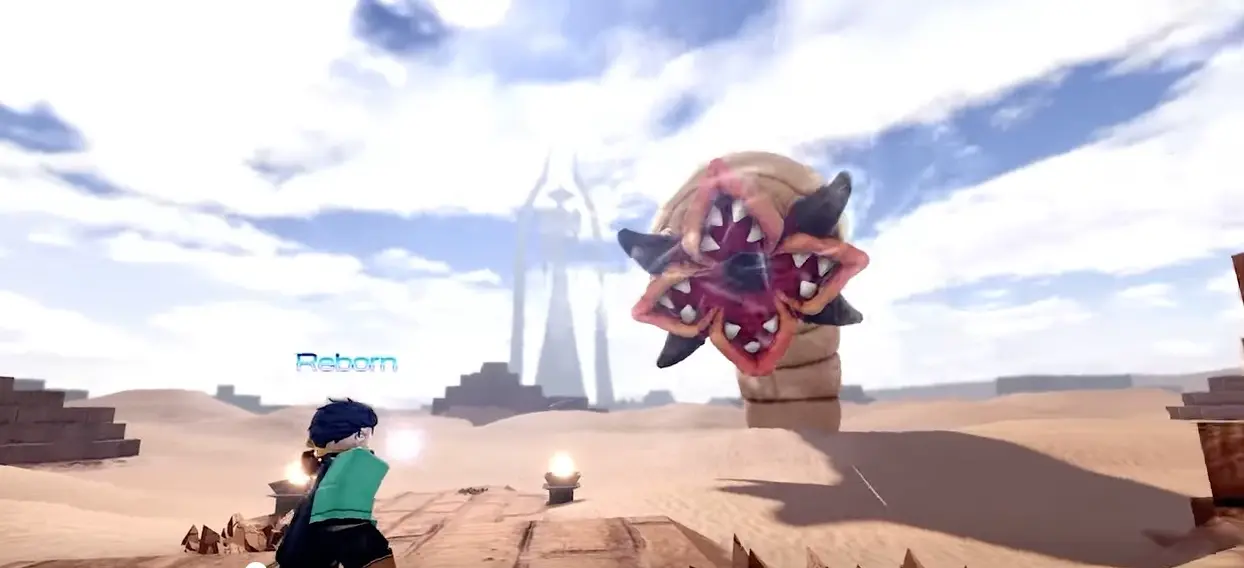
Journey to the Watchtower is an endurance run by design. You cross a hostile desert toward the distant Watchtower, the deadly light and the tower’s attacks chip away at your attempt, and a giant sandworm can end a run in seconds. The official description makes the promise that defines the whole experience: every death makes the next journey easier. The mechanism behind that promise is rebirth — the system that converts a failed run into permanent power. This page breaks down everything that can be verified about how Journey to the Watchtower rebirth progression works, what is still unverified, and how to plan your first resets without wasting effort.
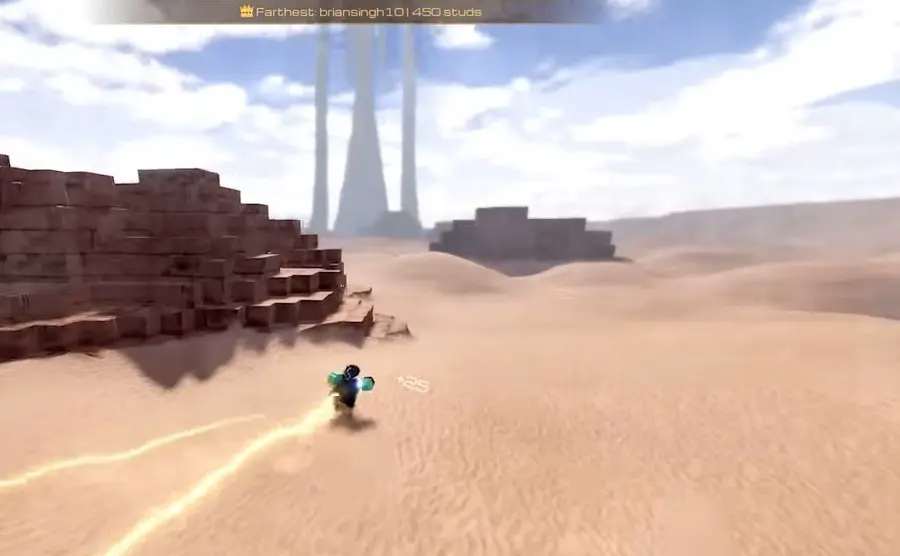
Distance is the scoreboard: the server HUD tracks the Farthest run in studs. Rebirth is what pushes that record farther over time.
What rebirth actually does
The developer’s official experience description lists four pillars of progression: survive the Watchtower’s attacks, roll powerful Spirits and Sins, upgrade your stamina, speed, and Insanity gain, and "♻️ Rebirth to become permanently stronger." Rebirth is the last pillar for a reason — it is the step that makes everything else cumulative. Without it, every death would wipe the slate clean and the desert would never get easier. With it, each attempt feeds the next.
Think of a single run as earning two things at once: distance toward the Watchtower, measured in studs on the server HUD, and resources for progression. Insanity buys the run-to-run upgrades. Rebirth then takes the progress you have banked and exchanges it for permanent strength that no death can take away. That is the loop the developer summarizes in one line: "Every death makes the next journey easier." Every Journey to the Watchtower rebirth guide has to start from that exchange, because the moment you understand resets as currency rather than failure, the whole progression system clicks into place.
Because the game is built as an incremental simulator on Roblox (Roblox classifies it under Simulation → Incremental Simulator), the rebirth system follows the pattern genre veterans expect: repeated resets, each one cheaper to redo and each one leaving you stronger than the last. What this game adds on top is the survival layer — the worm, the light, and the tower’s strikes — which means your upgraded stats have an immediate, visible effect on how far each run reaches.
How rebirth fits the run cycle
A full progression cycle in Journey to the Watchtower looks like this. First, you run: spawn into a server of up to 15 players and push into the desert as far as your current stats allow. Second, you fall: the deadly light, the tower’s attacks, or the sandworm ends the attempt. Third, you invest: the Insanity you earned goes into stamina, speed, and Insanity-gain upgrades. Fourth, you rebirth: once your progress stalls, you trade your current save for permanent power. Fifth, you repeat — and this time the desert gives ground a little more slowly.
The rebirth step is what separates players who circle the same distance plateau from players whose Farthest record climbs every session. Upgrades alone improve individual runs; rebirth compounds them. The stamina that used to run out at the first ridge now lasts past the worm’s territory, and the speed that barely dodged the tower’s first strikes now buys you real distance toward the structure on the horizon.
One practical caution: the exact rebirth costs, multiplier values, and unlock gates have not been published in any source checked for this guide. Community pages describe the mechanic in the same qualitative terms as the official description, but nobody has documented the numbers. Read the in-game rebirth menu before committing — it shows the actual exchange rate for your current save.
Planning your first rebirth
New players should resist the urge to rebirth immediately and equally resist hoarding progress forever. A simple, verifiable plan: claim the active codes first — the five working Journey to the Watchtower codes grant a combined 37,500 Insanity, which is enough to buy the early stamina and speed upgrades without grinding — then run the desert until your Farthest distance stops improving across several attempts. That stall is the signal that your current save has extracted most of its value and a reset will compound better than another run.
Before resetting, spend Insanity rather than hoarding it. Upgrades improve every future run whether or not you keep them after the reset, and idle currency is the one resource a rebirth definitely cannot help. The Insanity-gain upgrade deserves special attention: it raises the payout of every later run, so it compounds through both upgrades and rebirths at the same time.
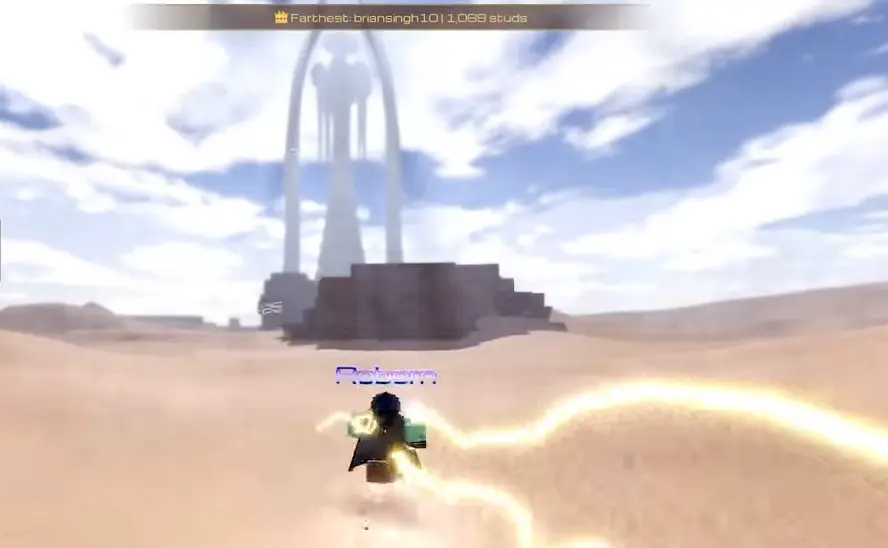
Finally, anchor expectations to the distance HUD, not to feelings. The server tracks the Farthest run in studs — community screenshots show early records in the hundreds of studs and stronger saves pushing past a thousand. If your record has been flat for a session, the desert is telling you it is time to reset and come back permanently stronger.
Rebirths from codes — the documented record
Codes have handed out Rebirths directly in the past, which makes the code archive the only documented window into how the developer values the mechanic. The largest package on record was SORRYFORTHEWAIT at 15,000 Insanity plus 10 Rebirths — a delay-apology drop that immediately expired. UPDATE3 granted 10,000 Insanity, 5 Rebirths, and 15 Orbs. HAPPYBIRTHDAY and PVPUPDATE each granted 10,000 Insanity and 5 Rebirths, and NEWUPDATE granted 5,000 Insanity and 3 Rebirths.
All of those had already expired by the September 1–4, 2026 cross-checks. The five codes that remain active — UPDATE2, INFINITESNIPE, UPDATE1, BUGFIXES, and RELEASE — grant Insanity only, 7,500 each. The pattern still matters: when the developer ships a major update or wants to apologize for a delay, Rebirths appear in the reward package. Watching the official Roblox community group for Brian’s Youtube Gang is the realistic way to catch the next drop that includes them.
The full reward history for every documented code, active and expired, is kept on the codes page , last verified . The update timeline on the updates page shows when each of those code-era milestones shipped.
Honest limits of this guide
This page deliberately avoids numbers it cannot support. The following are not documented in the official description or in any source checked for this guide: the exact Insanity or Orb cost of each rebirth, the multiplier applied by each rebirth level, whether Insanity or upgrades reset on rebirth, the maximum rebirth count, and any interaction between rebirth and the Spirits and Sins roll system. Where other sites state those numbers confidently, they are either reading the in-game menu themselves or guessing.
What is verified is the shape of the system: rebirth exists, the developer markets it as the source of permanent strength, Rebirths have shipped as code rewards, and the game’s core promise — every death makes the next journey easier — is implemented through it. For everything else, the in-game menu is the authority. This guide will be revised whenever the developer publishes patch notes or the community produces a verifiable breakdown.
Where to go after your first rebirth
Once the reset loop feels comfortable, the rest of this wiki fills in the details. The Insanity currency guide explains what each upgrade line buys and where the Spirits and Sins rolls fit. The first hour guide sequences your first session, and the beginner guide covers the fundamentals from the tutorial onward. Because each attempt ends in the desert anyway, the real question is never whether to die — it is whether the next rebirth makes the following run long enough to reach new ground. Rebirth early, spend smart, and let the Watchtower come to you.
FAQ
What does rebirth do in Journey to the Watchtower?
Rebirth converts the progress of your current save into permanent strength for every future run. The official description states it directly: "Rebirth to become permanently stronger," and "every death makes the next journey easier." In practice that means the stamina, speed, and Insanity foundation you build before rebirthing keeps paying off across all later attempts.
How do I get free Rebirths from codes?
Several retired codes granted Rebirths alongside Insanity: SORRYFORTHEWAIT gave 10, UPDATE3, HAPPYBIRTHDAY, and PVPUPDATE gave 5 each, and NEWUPDATE gave 3. All of those had already expired by the September 2026 checks, so the only reliable Rebirth source today is playing the game itself — codes currently active grant Insanity only.
When should I rebirth for the first time?
The game does not publish exact rebirth costs or multiplier values in any checked source, so there is no verified "perfect" moment. A safe pattern for new players: buy the early stamina and speed upgrades first, survive noticeably farther than your first runs, then take your first rebirth once progress stalls. Read the in-game rebirth menu for the actual cost curve before you commit.
Does rebirth reset my Insanity and upgrades?
The official description does not specify exactly which resources reset, and no checked source documents the reset rules. Treat the in-game rebirth confirmation screen as the source of truth — it shows what you keep and what you give up before you confirm. The permanent part is explicit: rebirth makes you permanently stronger.
Is rebirth required to reach the Watchtower?
The game is designed around it. The desert, the deadly light, the tower’s attacks, and the sandworm end early runs long before the Watchtower, and the loop of dying, upgrading, and rebirthing is how the official description says progress happens. Rebirthing to become permanently stronger is the intended path to closing the distance.
Do Rebirths stack with Insanity upgrades?
They complement each other. Insanity buys the stamina, speed, and Insanity-gain upgrades that improve each individual run, while rebirth locks in permanent gains that survive resets. The compounding combination — spend Insanity on upgrades, rebirth to keep part of the progress, repeat — is the core progression engine described by the developer.
Sources and verification
These links show where this page's factual inputs came from. Community and independent references are not developer announcements.
- Roblox experience listing (Official) - Game identity, creator, player limit and public experience description
- Roblox Games API snapshot (Official) - Visits, favorites, active-player snapshot, creation and update timestamps
- PCLabs codes guide (Portuguese) (Community) - Independent cross-check: 5 active codes, 37,500 total Insanity, progression overview
Page inputs checked .
Recommended guides

Data source: Official Roblox experience description and Games API snapshot, cross-checked against community coverage. Last verified .